Smartphone GPS and Activity Data Analysis
Introduction
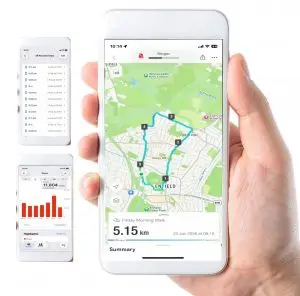
Every day, we generate a wealth of location and activity data simply by carrying our smartphones and wearing smart watches everywhere we go. Fitness and activity tracking apps store a wide range of digital information about exercise, steps taken, stairs climbed, location, and routes taken during exercise, all with time references, many with geolocation data.
All this data can, in most cases, be extracted from the phone and used to analyse its movements and, by extension, those of the person carrying it.
This data, along with other sources such as cell site analysis, call data records, CCTV footage, and witness statements, forms an overall picture of activity over the period of interest.
Smartphone Activity Trackers and Health Apps
Many health and activity applications are available for iPhones and Android smartphones, many of which record location data from the phone’s GPS. This data can be exported and used as a good source for location cross-referencing. Some are installed as default applications, such as Apple Health, and others are free or subscription-based apps available from the App Store or Google Play.
The data are available for export, and the level of detail varies by app. Some contain GPS data from the phone’s built-in GPS receiver, while others may only include data such as the number of steps taken.
The data can help by cross-referencing against other location data, and even the number of steps taken can indicate movement from one location to another.
Data Extraction
Health information can be extracted from the smartphone in multiple ways. The most direct method is to export directly from the application interface. The Apple Health application has a built-in export function. This process provides the user with files detailing the phone user’s health and activity information.
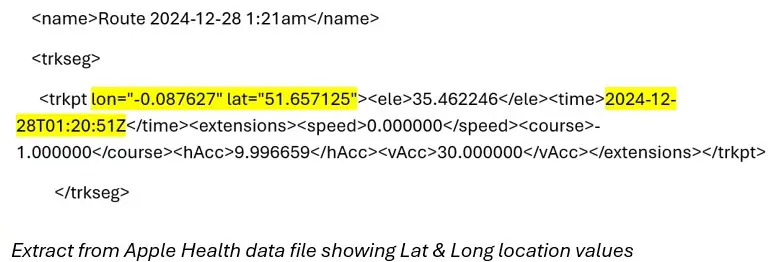
Included, depending on the activity logged, are workout-routes files. These .GPX files contain GPS coordinate data for users’ Activity workout routes. These files can be imported into Excel, analysed as required, and then reformatted as a KML file for mapping software, such as Google Earth, to view the full location activity.
Apple Health information, as well as other geolocation data, can also be retrieved using dedicated forensic software, providing a full profile of the phone’s activity and, therefore, the activity of the person carrying it.
The Value of Data Analysis
Once data such as GPS coordinates, tracks, and supporting data, such as step counts and stairs climbed, are available, a visual picture of a phone’s movements can be formed.
This location and movement data can then be compared with other evidence sources to determine the probability that events of interest occurred.
The mobile device evidence, including network data such as cell-site analysis and call records, answers questions such as “Was the mobile device operating at a location of interest during the relevant time?”
The Role of the Expert Witness
Location-related mobile device evidence is being used increasingly to address questions in criminal investigations. The role of the expert witness is to explain how the data was generated, provide an opinion on its accuracy, and answer specific questions raised by the legal team, particularly regarding location events.
To avoid errors and misinterpretations, this evidence must be evaluated carefully from a forensic perspective, by an expert with experience of smartphone location and event data, taking into account its accuracy and reliability, and always remembering that the data is relevant to the mobile device and that other evidence may be necessary to place the person of interest with that device.
